
Family-Friendly Hiking in Central Maine: 10 Must-Visit Trails2024 | You and Me Real Estate, Brokered by eXp RealtyDiscover the Great Outdoors: 10 Easy, Scenic Hikes for Families in Central Maine

Dated: March 29 2022
Views: 264
The kitchen has become the hub of the modern home, not just a cook space but a gathering place for family and friends and a focal point for activity. With all that goes on in today’s kitchen, it’s crucial that the floor can withstand high foot traffic as well as all the inevitable spills and spatters. It also has to suit your style and fit within your budget. Reconciling these needs can be difficult, so we created a guide to help you end up with nothing but the best kitchen flooring for your family. Read on for the most important attributes of a kitchen floor and which options fit the bill.

Kitchen floors have a big job to do: they’ve got to stand up to a lot of foot traffic, shrug off spills and stains. Your kitchen floor, besides being practical and durable, is a major design statement as well. The floor you choose affects every other element of your design and with the variety of materials, colors, and textures available today, your choices are nearly endless.
Some things to consider when shopping for kitchen floor tile:
Your Lifestyle. At home, chances are, the sauce gets spilled, silverware gets dropped, and spouses, kids, and pets check in often. It's important to choose floors that stand up to this type of wear and tear. And if you have young children or plan to stick around for years, nonslip floors are important for safety. The floor should be dust-free means should not be kutcha. Because if the floor is kutcha (temporary) dust particles can make the food dirty and unhygienic. Proper tiles should be placed in the kitchen.
Your Style. What colors and patterns do you like? Think about which floor textures appeal to you: the rich grain of hardwood, luxuriously thick carpet, or the sleek lines of tile. Choose floors that complement your kitchen, whether it's rustic and country-style or cutting-edge contemporary. Consider the kitchen's size, as well as existing colors, textures, and patterns.
How comfortable you are. If you spend hours on your feet slicing, dicing, and stirring consider floors with a bit of softness and resilience. Tile floors, for instance, can be uncomfortable to stand on for long periods. Wood is better for reducing leg fatigue. And resilient floors, with their elasticity, are the most comfortable for feet. Whatever you choose, a soft mat or rug can add comfort as well.
Ease of Cleaning. Between food spills and tracked-in dirt, kitchen floors can get pretty grimy. To minimize time spent on maintenance, choose a material that's easy to clean, water-resistant, and not prone to staining.
Cost. If you're planning a remodel, your budget is probably divvied among countertops, cabinetry, lighting fixtures, and more. Where does flooring fit in the plan? Once you've determined your flooring budget, measure the kitchen to get an idea of square footage. Remember that additional costs may apply, including underlayment, delivery, installation, removal, and disposal of your previous floor.
Fortunately, you’ve got a lot of choices once you determine what works best for your needs.
Here are some of the best kitchen flooring ideas:
Sheet Vinyl
Pros: Water-resistant, comfortable underfoot, and budget-friendly
Cons: Heavy appliances can leave depressions (avoidable with coasters under appliance legs)
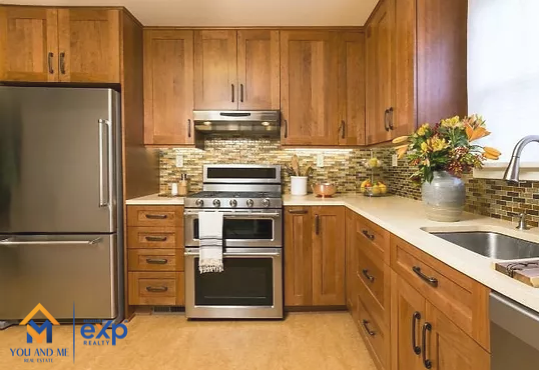
Sheet vinyl has been around for decades and has only gotten better. Vinyl flooring is highly durable. If installed and maintained correctly, it can last upwards of 10-20 years. That said, vinyl is a great choice for the rooms in your house that get the most foot traffic. Additionally, most vinyl flooring has a wear layer on its surface that resists scratches and stains. The fact that it comes in a large sheet, as opposed to small, stick-down tiles, means there are no seams where water can seep down to the subflooring. Sheet vinyl offers wall-to-wall waterproof floor protection, which is always welcome in busy kitchens that see a lot of spills.
Vinyl flooring doesn’t get cold in the winter (as, say, ceramic tile can), so it’s comfortable underfoot all year round. This comes on a large roll, similar to linoleum flooring. It is installed in one big sheet that covers your space, with no visible seams.
Sheet vinyl is one of the most affordable flooring materials you can buy. It's relatively easy to produce since it comes in large rolls instead of individual planks and tiles. Many homeowners choose the material because it's a budget-friendly alternative to real hardwoods or ceramic tile.
Hardwood
Wood flooring is any product manufactured from timber that is designed for use as flooring, either structural or aesthetic. Wood is a common choice as a flooring material and can come in various styles, colors, cuts, and species. Dark hardwood flooring grounds this lovely farmhouse-inspired kitchen with a modern flair. Sleek, white cabinets provide lots of storage, and marble countertops are paired with a subway tile backsplash.
Hardwood flooring combines warmth and beauty and is comfortable underfoot. It’s a good choice if you have an open floor plan and want a single type of flooring that extends beyond your kitchen.
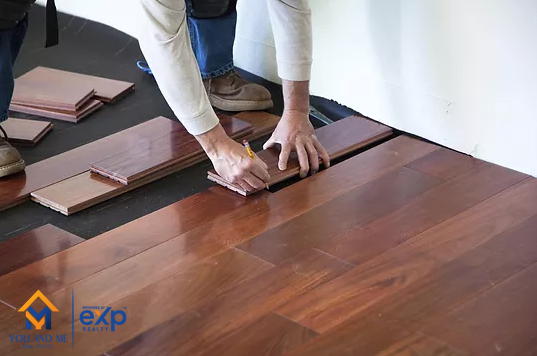
Hardwood combines durability with low maintenance. Properly finished hardwood flooring resists moisture from occasional splashes, but spills should be wiped up immediately.
Porcelain Tile
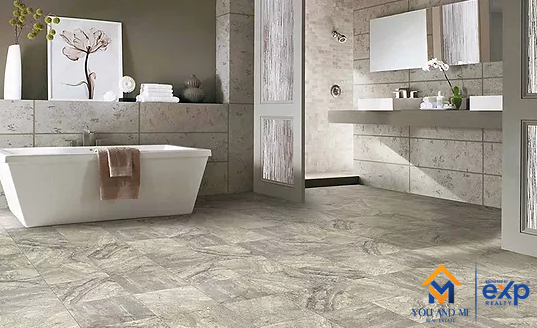
Pros: Extremely durable, waterproof, stain-resistant, and good for high-traffic areas
Cons: Grout requires periodic sealing to prevent stains
Porcelain tiles or ceramic tiles are porcelain or ceramic tiles commonly used to cover floors and walls, with a water absorption rate of less than 0.5 percent. The density of porcelain tile makes it more durable than ceramic tile while being less subject to wear and tear. This makes it more suitable for commercial use as well as in the home. Water Resistance: Porcelain tile is almost impervious to water compared to ceramic tile.
Porcelain tile floors are less prone to breaking, and they are designed to hold up well.
The very feature that makes tile easy to clean—its smooth, non-porous nature—also means that it is slippery underfoot. Add extra tile glazing, water, and dress shoes, and a rush to get to work can mean a trip to the emergency room instead.
Limestone
Limestone is a beautiful type of natural stone that is popular used as flooring. This highly durable stone adds sophistication to any space with muted earth tones and dozens of styles.
When maintained well, honed Limestone tiles also give a soothing look and feel. They are also not slippery and therefore safe in use for everyone. Fortunately, limestone is very durable.
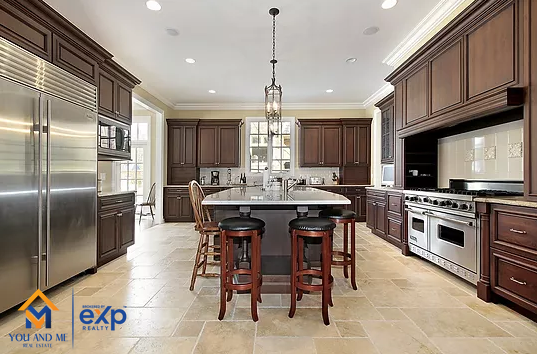
It can also be treated with sealers that can help protect the surface of the tiles and keep it stained-free, as well as help to make the flooring easier to clean. As well as providing a fabulous natural surface indoors, limestone flooring can also be installed outdoors.
Limestone is good for a kitchen floor as it's very hard-wearing and easy to clean. Natural stone flooring retains heat and will naturally adjust to the temperature of the room, but for added warmth underfloor heating can be installed beneath the stone.
Cork
Pros: Budget-friendly, DIY-friendly, warm, and cushioned feel underfoot
Cons: Can be scratched by heavy objects
Cork is waterproof and resilient, which makes it a comfortable, moisture-resistant choice for kitchen floors. Cork flooring is a product made from the bark of the cork oak tree, a material that is ground, processed into sheets, and baked in a kiln to produce tiles that serve as flooring for offices, light commercial locations, and residences.
One of the main drawbacks of cork is it is soft. For people looking for “perfect looking” floors for decades, cork cause upset. It will scratch (like hardwood). It requires maintenance products to be used (just like laminate) and on occasion, the surface needs to be refreshed (like hardwood).
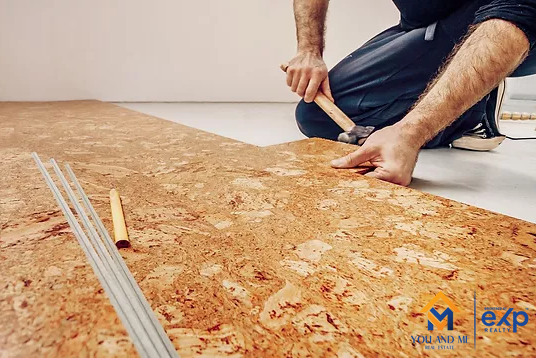
Cork can fade if exposed to direct sunlight, so protect your floor by using curtains or blinds. Clean-up is simple; wipe up spills promptly and mop with soapy water when necessary. Follow up by wiping the floor with a clean, dry microfiber mop to remove excess water.
Cork flooring resists stains but it is not stain-proof. Spilled wine that’s not promptly wiped up may leave a stain, but one of the cool things about cork is that it can be refinished by sanding down the surface and then applying a stain and a sealer.
Stone Tile
Pros: Adds a natural, one-of-a-kind ambiance (no two tiles are identical), non-slip surface
Cons: Expensive and can stain without regular sealing
Natural stone tile is exactly how the name sounds. It's a non-man-made, all-natural material straight from Mother Earth! There's a variety of different natural stones, like slate, granite, marble, limestone, travertine, and sandstone. Because natural stone is found in nature, it is highly resistant to weather and wears. It is also more valuable than ceramic tile because it cannot simply be reproduced from synthetic materials. Natural stone flooring increases your home's market value more than ceramic tile.
Stone floors are by far one of the most durable materials out there. Choosing stone floors is a choice that will last for years to come. Works indoors and outdoors: To achieve an indoor-outdoor seamless flow masterfully, there's no better material than stone.
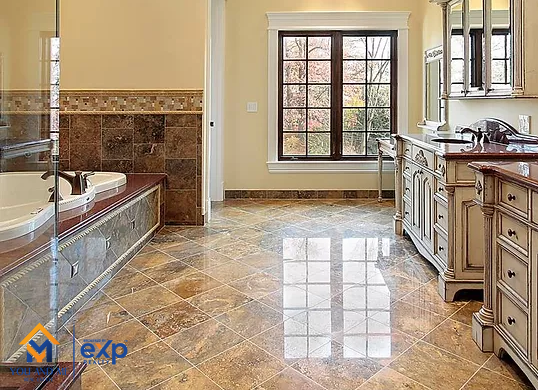
Natural stone is sturdy, durable, and provides good traction. It's not slippery like ceramic and other materials, which makes it a safe option for kids and pets, especially in the kitchen.
You can tell it is a stone tile for texture. A fairly uniform texture—whether polished, matte, or distressed—may signal a porcelain tile floor. Natural stone tiles will have small pits, fissures, and abnormalities that porcelain will not have.
Have you checked what type of Kitchen flooring do you have at home? Are you planning to do an upgrade? We wanted to hear more of that from you! Let us know in the comments below to see how we can help.

Discover not just a property, but a place that symbolizes the strength of community and the essence of heartfelt relationships. Meet Tessie Elwell, your go-to real estate expert in central Maine, whos....
Family-Friendly Hiking in Central Maine: 10 Must-Visit Trails2024 | You and Me Real Estate, Brokered by eXp RealtyDiscover the Great Outdoors: 10 Easy, Scenic Hikes for Families in Central Maine
Explore the world of real estate with us - from buying and selling to investing and home improvement, our expert team offers practical advice, valuable insights, and up-to-date information to make
Explore the world of real estate with us - from buying and selling to investing and home improvement, our expert team offers practical advice, valuable insights, and up-to-date information to make
Navigating The 2024 Maine Real Estate Market: Insights and Predictions2024 | You and Me Real Estate, Brokered by eXp RealtyAs we move deeper into 2024, the Maine real estate market continues to
 Listing data is derived in whole or in part from the Maine IDX and is for consumers' personal, non commercial use only. Dimensions are approximate and not guaranteed. All data should be independently verified ©2026 Maine Real Estate Information System, Inc. All Rights Reserved.
